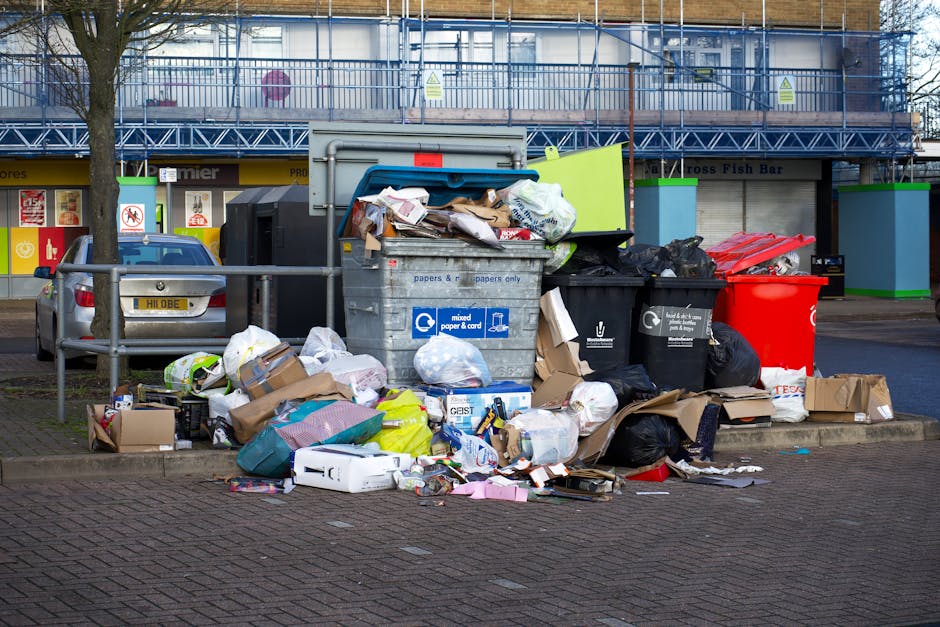
Fast rubbish clearance near Old Street N1
Posted on 03/09/2026

Fast rubbish clearance near Old Street N1: a practical guide for quick, safe, stress-free removal
If you need fast rubbish clearance near Old Street N1, you are usually not looking for theory. You want the pile gone, the flat or office usable again, and the whole thing handled without hassle. Maybe it is a last-minute move, a landlord inspection, a shop refit, or a builder leaving more rubble than expected. Whatever the reason, speed matters, but so does doing it properly.
This guide explains how quick clearance works in real life, what to expect, how to avoid the common traps, and how to choose a service that is both efficient and responsible. Along the way, you will find practical tips for Old Street and nearby Shoreditch streets, where access can be tight, parking can be awkward, and time really is money. To be fair, that is half the battle in this part of London.
For a broader look at the range of options available, you can also review the services overview and the company's about us page if you want to understand the team and how they work.
- Why it matters
- How it works
- Key benefits
- Who needs this
- Step-by-step guidance
- Expert tips
- Common mistakes
- Tools and resources
- Compliance and best practice
- Options compared
- Real-world example
- Checklist
- Conclusion
- FAQ
Why Fast rubbish clearance near Old Street N1 Matters
Old Street sits in a busy stretch of London where flats, offices, restaurants, studios, and renovation projects sit cheek by jowl. That means waste can build up quickly, and once it does, it tends to get in the way of everything else. A blocked hallway slows people down. A sofa left by the door feels bigger every hour. A builder's bag that should have gone yesterday starts to look like a full-blown site issue.
Fast rubbish clearance is not just about convenience. It helps keep walkways clear, reduces trip hazards, and stops waste from lingering in shared areas where it may annoy neighbours or attract unwanted attention. If you manage a property, retail unit, or rental, prompt removal also protects your schedule. Missed deadlines tend to snowball. One small delay becomes a whole afternoon lost to waiting around for lift access, parking, or a second visit.
There is also a trust element. Good clearance work should leave you feeling relieved, not uncertain. You should know where the waste is going, who is handling it, and whether the company is working in line with standard UK waste practices. That is where a little due diligence pays off. It is not glamorous. It just saves headaches later.
Expert summary: The best fast-clearance jobs are the ones that feel calm, organised, and quick from the customer's point of view. Speed matters, but clean planning matters just as much.
If you are comparing services, it can help to read about waste carrier licence and compliance before you book. A fast job should still be a legitimate one.
How Fast rubbish clearance near Old Street N1 Works
In practical terms, fast rubbish clearance usually follows a simple process. You send a description, share a few photos if possible, receive a quote or estimate, and book a collection slot. For urgent jobs, the best providers will often try to turn things around the same day or next day, depending on size, location, and access. That last part matters more than people think.
In Old Street N1, the actual collection can be straightforward or surprisingly fiddly. A ground-floor office with rear access is one thing. A top-floor flat with no lift and a narrow stairwell is another story entirely. Good operators factor in labour, access, and load time rather than just guessing from the type of waste. That usually leads to fewer surprises for everyone.
Here is what generally happens on the day:
- The team arrives within the agreed window.
- They assess the load and confirm the scope if needed.
- They remove items carefully, often carrying them through communal areas with extra care.
- The waste is loaded safely into the vehicle.
- The area is checked so loose debris, small fragments, or packaging are not left behind.
For many households, the process is quick and almost invisible. For commercial clients, the important part is keeping the disruption low. Nobody wants staff stepping over broken furniture legs while customers are coming and going. In our experience, the smoothest jobs are the ones where the customer has already grouped the waste in one spot and mentioned access details up front. Simple, but it works.
Depending on what needs removing, you may also want to look at specific service pages such as domestic waste collection, furniture removal, or builders waste removal. That helps match the job to the right type of vehicle and labour.
Key Benefits and Practical Advantages
The obvious benefit is time. Fast rubbish clearance near Old Street N1 can clear a room, corridor, or loading area in a single visit, which is a big deal if you are working to a deadline. But the less obvious benefits are often the ones people appreciate most after the job is done.
- Less disruption: your space becomes usable sooner, which is especially helpful in shared homes and active workplaces.
- Safer movement: fewer obstacles reduce the risk of trips, bruises, and damaged walls or flooring.
- Better presentation: useful when letting agents, buyers, landlords, clients, or contractors need access.
- More predictable planning: one clear collection is easier to organise than several small trips.
- Cleaner handover: ideal before moving out, starting a refit, or returning a property to service.
There is also a mental benefit, though people do not always say it out loud. Seeing rubbish disappear can make a space feel manageable again. That is especially true after a house clearance or a renovation where the clutter has been hanging over you for days. Suddenly the room breathes. You can hear your own footsteps again. Sounds dramatic, but it is true enough.
For business owners, fast clearance can protect customer experience and staff efficiency. For landlords, it can help prepare a property for new occupants. For homeowners, it just gets the mess out of the way so life can move on.
Who This Is For and When It Makes Sense
This kind of service is useful for a wider range of people than many expect. It is not just for emergency clear-outs or major renovations. Often, it is the small practical jobs that create the most friction.
Fast rubbish clearance near Old Street N1 makes sense if you are:
- moving out of a flat and need bulky waste gone before handover
- clearing out an office, studio, or small retail unit
- dealing with post-refurbishment debris
- disposing of old furniture after a replacement delivery
- emptying a rental property between tenancies
- tidying shared spaces in a block or managed building
- trying to remove garden or exterior waste quickly before it spreads
It also helps when the council collection route is too slow for your timeline, or when the waste simply is not suitable for a standard domestic bin arrangement. Let's face it, a broken wardrobe and half a bathroom's worth of packaging are not going to fit neatly into a weekly bin schedule.
If you are unsure whether your waste falls into a particular category, the site's white goods and appliance disposal page and house clearance page can help clarify the type of service that fits best.
Step-by-Step Guidance
If you want the quickest possible result, a little preparation goes a long way. You do not need to stage the space like a film set, but you do need to make the job easy to assess.
- Take a clear look at the waste. Separate bulky items, bagged rubbish, recyclables, and anything unusual such as paint tins, appliances, or construction debris.
- Photograph the pile. A few useful photos usually speed up quoting and reduce back-and-forth.
- Note access details. Stairs, lifts, loading bays, parking restrictions, key codes, and narrow hallways all matter.
- Ask what is included. Check whether labour, loading, sweep-up, and disposal are all part of the price or handled separately.
- Confirm the timeline. If it is urgent, say so plainly. "Today if possible" is much better than vague urgency.
- Prepare the space. Move fragile items out of the way and clear a route to the collection point if you can.
- Keep communication open. If the waste grows after the quote, tell the provider before they arrive.
A small but useful tip: if you are clearing a flat near Old Street with communal access, let neighbours or building management know in advance if the collection may involve shared hallways or a loading area. That small bit of courtesy can save a lot of irritation later. And sometimes it avoids a very British awkward conversation in the stairwell.
Expert Tips for Better Results
Most clearance problems are avoidable. They happen because the job is rushed in the wrong places, not because the service itself is complicated. A few smart habits make a noticeable difference.
- Group waste by type. Mixed piles are fine, but separating obvious recyclables or appliances helps the crew plan the lift and load order.
- Be honest about volume. Understating how much there is leads to delays or awkward add-ons. Nobody enjoys that.
- Think about parking before collection day. In Old Street and surrounding streets, access can change quickly depending on time and traffic.
- Choose the right service for the material. Heavy rubble, furniture, and general household waste are not all handled the same way.
- Keep valuables and paperwork separate. This is especially important during house clearances and office clear-outs.
One practical observation: the best fast clearances usually happen in the morning. Roads are a bit calmer, building access is easier, and everyone still has some patience left. By late afternoon, things can get a little more chaotic. Not always, but enough to notice.
If sustainability matters to you, check the company's approach to sorting and diversion from landfill in the recycling and sustainability section. A quick collection should not mean careless disposal.

Common Mistakes to Avoid
People often think the fastest option is always the simplest one. Sometimes it is. Sometimes it creates problems that only show up after the van has gone. A few mistakes come up again and again.
- Not sharing access details early. This can cause delays, missed parking, or an underestimated labour requirement.
- Booking on price alone. Cheapest is not always cheapest if the quote excludes key services or creates a second visit.
- Mixing hazardous items in with general waste. Certain materials need separate handling. Do not assume everything can go together.
- Leaving loose waste scattered around. It slows the crew down and increases the chance of something being missed.
- Ignoring compliance questions. If a provider cannot explain how they handle waste responsibly, that is a red flag.
Another common issue is assuming every job will be "same day" simply because it is urgent. In truth, availability depends on the size of the job, traffic, the time of day, and the amount of labour needed. A trustworthy provider will be clear about that rather than pretending everything is magic.
Tools, Resources and Recommendations
You do not need specialist equipment to arrange rubbish clearance, but a few simple tools make the process smoother. A phone camera, a tape measure for bulky items, and a notepad for access details are often enough. Old Street buildings can have awkward corners and tight doorways, so the more precise your information, the easier the job becomes.
Useful things to prepare before you request a quote:
- photos of the waste from different angles
- rough item counts for furniture or appliances
- floor level and lift access details
- any parking or loading restrictions
- preferred collection window
- special handling notes for fragile, heavy, or awkward items
If you want to compare the likely fit of different jobs, the following pages are especially helpful:
- pricing and quotes for understanding how estimates are handled
- payment and security if you want reassurance on transactions
- insurance and safety for peace of mind around the practical side
- services overview for the wider menu of clearance options
For local readers curious about the broader area and how everyday life functions around it, the blog posts a local's guide to Shoreditch beyond the bustle and brick lane rubbish removal for flats in Shoreditch offer useful nearby context.
Law, Compliance, Standards, or Best Practice
Waste clearance in the UK carries real responsibilities. You do not need to become an expert overnight, but it is wise to know the basics. Reputable operators should be able to explain how they handle waste lawfully, what happens to collected material, and how they avoid fly-tipping or improper disposal.
In plain English, here is what good practice usually looks like:
- the operator can show evidence that they are permitted to carry waste
- waste is transported to appropriate, legitimate facilities
- loads are handled safely and without unnecessary risk
- customers are given clear terms, pricing, and service expectations
- recycling and reuse are considered where practical
That is why compliance pages matter. They are not there for decoration. They help you judge whether a company takes the job seriously. If someone offers an unrealistically cheap deal and cannot explain where the rubbish will go, the bargain may be fake. No need to overcomplicate it.
When comparing providers, it is sensible to review terms and conditions as well as the company's approach to service standards. That is especially true for time-sensitive jobs, where clarity matters.
For commercial customers, it is also worth looking at commercial waste removal if the waste comes from an office, retail unit, or hospitality space rather than a household.
Options, Methods, or Comparison Table
Different clearance methods suit different situations. If you are trying to move quickly near Old Street N1, it helps to choose the route that matches your waste type, budget, and urgency.
| Option | Best for | Speed | Practical notes |
|---|---|---|---|
| Same-day rubbish clearance | Urgent household or office waste | Very fast | Best when access is clear and the waste is ready to load |
| Scheduled next-day collection | Most small to medium clearances | Fast | Often the best balance of convenience and planning |
| Dedicated builders waste removal | Refurbishment debris, rubble, offcuts | Fast to moderate | Needs accurate volume and material description |
| Furniture removal | Sofas, tables, beds, office furniture | Fast | Helpful for awkward staircases and bulky items |
| House clearance | Whole rooms, full properties, probate-related clear-outs | Moderate to fast | Needs careful sorting and a realistic time window |
In practice, the "best" option is the one that avoids repeat visits and confusion. A quick collection that only removes half the pile is not quick at all. It is just a reshuffled problem.
Case Study or Real-World Example
Imagine a small creative studio near Old Street that has just finished a light refit. There are old desks, packaging, a couple of broken chairs, and a fair amount of mixed waste from the project. Staff need the room turned around before Monday morning. The landlord also wants the corridor left clear. Not a dramatic emergency, but definitely time-sensitive.
The team takes photos, notes that the building has a lift but limited loading access, and asks for a quick collection. The provider estimates the right vehicle size, explains what is included, and gives a realistic time window rather than promising the moon. On arrival, the crew works methodically, keeps the hallway clean, and removes the load in one visit. No fuss, no drama.
What made it work? Three things, really:
- the waste was described clearly
- the access information was accurate
- the service matched the type of waste rather than just the headline speed
That is the pattern you want. Fast, yes. But also tidy, lawful, and well-judged. If the job is being done properly, you should feel the pressure drop the moment the first items move out the door.
Practical Checklist
Use this quick checklist before you book:
- Have I identified exactly what needs removing?
- Have I taken clear photos of the waste?
- Do I know whether the items are general waste, furniture, builders waste, or appliances?
- Have I shared access details, including stairs, lifts, and parking limits?
- Do I know when I need the clearance completed?
- Have I checked the provider's compliance and safety information?
- Do I understand what is included in the quote?
- Have I separated anything I want to keep?
- Have I made the path to the waste as clear as possible?
- Am I happy with the service terms before confirming?
If you can answer yes to most of those, the job is already much more likely to go smoothly. A little prep saves a lot of faff.
Conclusion
Fast rubbish clearance near Old Street N1 is really about restoring order quickly without cutting corners. The best service is not only prompt; it is careful, transparent, and suited to the way people actually live and work in this part of London. Whether you are clearing a flat, an office, a shop unit, or a renovation spillover, the right approach should reduce stress rather than add to it.
Keep the process simple: describe the waste clearly, mention access issues early, check compliance, and choose a provider that treats speed and responsibility as partners, not opposites. That way, the whole thing becomes much easier than it first looks.
If you want to compare options, learn more about the service range, or get your collection arranged with less back-and-forth, start with the practical pages linked above and move from there. Calm, clear, done. That is the goal.
Get a free quote today and see how much you can save.
And if today has already felt a bit too full of clutter, noise, or admin, getting the rubbish out can be a surprisingly good place to start. One clean space tends to lead to another.